Choosing equipment can shape your spa’s treatments, daily workflow, and client experience. The best choice is not necessarily the newest device or the one with the longest feature list. It should match your services, staff training, room layout, and budget. A facial machine that looks impressive in a showroom may be awkward beside a narrow treatment bed. Small details matter.
Dermatologist Dr. Howard Murad has said, “The skin is a reflection of your overall health.” That perspective is a useful reminder: choose equipment that supports thoughtful, client-centered care, not promises of instant results. When considering how to choose the right beauty machine for a spa, check the device’s intended uses, operating instructions, maintenance needs, and the training available to your team. Ask suppliers for a live demonstration, then consider whether the controls feel clear and the treatment fits your existing menu. Check service support, warranty terms, and the cost of consumables, too. These details can be less exciting than polished product photos. They still matter.
Be honest about what you cannot yet judge. A short demo may not reveal the full learning curve, and client interest can be difficult to predict. Start with clear criteria, compare options, and ask for written specifications. The right fit should make sense on paper—and in your treatment room.
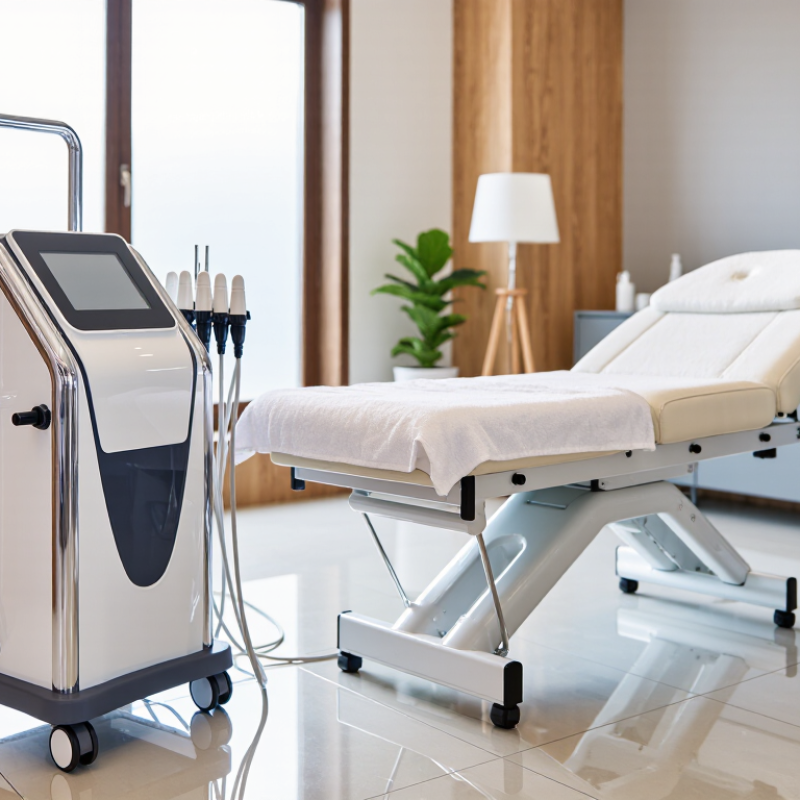
Before comparing machines, define the treatments your spa wants to deliver and the clients it serves. Are guests asking for relaxation, visible skin improvements, or shorter appointment times? Note their age ranges, comfort levels, accessibility needs, and typical booking patterns. A guest seeking a quiet facial may value gentle settings and a calm room; a time-pressed client may care more about treatment duration. Specifics matter.
The ISPA 2024 U.S. Spa Industry Study reported $21.3 billion in spa revenue and 183 million visits in 2023. Those figures describe a large, active market, not your own clientele. McKinsey’s 2024 wellness survey found that 82% of U.S. consumers considered wellness a top or important priority, but broad interest does not guarantee demand for a particular device. Ask clients directly. Review consultation forms, repeat bookings, and requests that staff cannot currently meet. Patterns can be revealing.
Keep the notes practical. Track desired outcomes, session length, and any skin sensitivities clients disclose. Then compare those needs with the machine’s training requirements, operating costs, and treatment protocols. A sleek device can still be a poor fit. I’d revisit the profile after a few months; early assumptions often miss something.
Match equipment to the services your clients want, your staff’s training, your treatment room, and the rules that apply in your location. A device should support a clearly defined service plan—not replace consultation or professional judgment.
| Treatment Goal | Potential Client Profile | Machine Category | What to Check Before Buying | Screening and Service Considerations | Spa Fit |
|---|---|---|---|---|---|
| Offer a gentle, non-invasive facial add-on focused on temporary skin comfort and appearance. | Clients seeking a relaxing facial experience with minimal downtime. | LED phototherapy device | Confirm the available light wavelengths, treatment protocols, eye-protection requirements, and whether the device is intended for professional use. | Ask about photosensitivity, relevant medications, and eye conditions. Follow the device instructions and use appropriate eye protection. | Suitable for spas building a low-downtime facial menu and able to provide consistent treatment protocols. |
| Add a facial massage-style service intended to provide temporary toning or a refreshed appearance. | Clients interested in a non-invasive facial service who are comfortable with a hands-on treatment. | Microcurrent facial device | Review electrode design, adjustable settings, training needs, cleaning requirements, and the manufacturer’s contraindication guidance. | Screen for implanted electronic devices, pregnancy, and other conditions identified in the device instructions. Avoid promising permanent lifting or structural changes. | Best for spas with trained providers and enough appointment time for careful consultation and application. |
| Provide superficial cleansing or exfoliation as part of a facial. | Clients seeking a simple, customizable cleansing step rather than an intensive procedure. | Ultrasonic skin spatula or cleansing device | Check the device’s intended use, adjustable settings, replacement-part availability, and cleaning and disinfection instructions. | Assess skin sensitivity, irritation, and active skin concerns before treatment. Use a gentle technique and follow the device directions. | Often a practical option for spas wanting a compact device that can be incorporated into existing facials. |
| Offer a hydradermabrasion-style facial that combines surface exfoliation with fluid-based cleansing. | Clients looking for a multi-step facial and who are suitable for gentle exfoliation. | Hydradermabrasion or water-based facial system | Compare consumable costs, handpiece maintenance, cleaning procedures, service support, and the space needed for the unit. | Check for sensitivity, irritation, or a compromised skin barrier. Tailor the treatment and avoid aggressive exfoliation when inappropriate. | Consider when there is steady demand for multi-step facials and the spa can manage ongoing consumables and maintenance. |
| Provide a professional skin-tightening-style service using controlled heating. | Adults seeking a non-surgical cosmetic service who understand that results and suitability vary. | Radiofrequency (RF) device | Verify the intended treatment area, energy controls, temperature or contact monitoring, staff training, service requirements, and applicable local rules. | Screen carefully for implants, pregnancy, altered sensation, and other conditions listed in the device instructions. Explain possible discomfort and adverse effects; follow the prescribed protocol. | Requires trained operators, thorough consultation, and a clear plan for maintenance and incident management. |
| Consider light-based services for concerns such as unwanted hair or selected visible skin concerns, where permitted. | Clients who meet the device’s suitability criteria and can follow pre- and post-treatment instructions. | IPL or laser platform | Confirm whether the device and intended service are permitted locally, operator qualification requirements, service support, protective eyewear, and the device’s skin-type guidance. | Requires detailed screening, including skin tone, recent tanning, medications, and relevant medical history. Use trained operators and the device-specific safety protocol; do not treat unsuitable clients. | Consider only when the spa can meet applicable regulations, training requirements, screening standards, and safety procedures. |
Selection tip: Before purchasing, define the intended service, target client, expected appointment length, total cost of ownership, staff training plan, cleaning requirements, warranty, and local regulatory obligations. Device indications and restrictions vary, so consult the manufacturer’s instructions and qualified professionals before offering a treatment.
Start with client requests, desired results, session length, and comfort levels. A quiet facial may need gentle settings.
Review age ranges, accessibility needs, skin sensitivities, consultation forms, and repeat bookings. Ask clients directly.
No. Market-wide spending and visits show broad activity, not demand at one spa. Local booking patterns matter more.
Include purchase, delivery, installation, consumables, servicing, training, and possible downtime. Slower months can change the forecast.
Request delivery, setup, training, service fees, warranty terms, and exclusions in writing. Keep the checklist.
Check that training includes safe operation, client screening, and hands-on practice. Ask whether refresher sessions are available.
Find out how long routine servicing takes and which parts need regular replacement. Small details matter.
Confirm who handles technical questions and typical response times. Plan how new staff will learn the equipment; I might overlook that otherwise.
Revisit it after a few months and compare assumptions with bookings and requests. Early guesses can miss something.
Choosing the right beauty machine for a spa starts with understanding the treatments you want to offer and the needs of your ideal clients. Consider how each machine’s core functions fit your services, and compare options based on practical benefits rather than features alone. Before making a decision, check relevant safety standards, certifications, and local regulations to help ensure the equipment is suitable for professional use.
When researching how to choose the right beauty machine for a spa, look beyond the purchase price. Factor in staff training, ongoing maintenance, supplier support, and the space and workflow requirements of your spa. A well-matched machine should fit your current operations while leaving room for future growth, helping you deliver consistent treatments and make a sustainable investment.

 OneSe Beauty