Why should aesthetic clinics invest in skin analyzers? The answer begins with better clinical visibility. Modern China-made skin analyzers can reveal details that ordinary lighting often hides. They may display hydration levels, pore visibility, pigmentation patterns, redness, texture, and wrinkle depth. This creates a clearer starting point for professional consultation.
Dr. Leslie Baumann, a respected dermatologist and skincare researcher, has emphasized, “Skin care is not one-size-fits-all.” That principle matters in every clinic. A client may request brightening treatment while the analyzer highlights dehydration or sensitivity. The consultation then becomes more precise. It also becomes easier to explain why a treatment plan needs adjustment.
Clear evidence builds trust.
For clinics in China and international markets, these devices can support standardized assessments across different practitioners. They can capture baseline images, track changes, and help clinicians discuss realistic outcomes. A visible comparison after four or eight weeks can make progress easier to understand. However, technology should support professional judgment, not replace it. Some readings can change with lighting, makeup, recent exercise, or improper positioning. That limitation deserves honest discussion.
Clinics should also examine device calibration, software stability, staff training, consent procedures, and personal-data protection before purchasing. A cheaper analyzer may create hidden costs if reports are inconsistent or difficult to interpret. The strongest investment is not simply the most advanced machine. It is the system that produces reliable information and improves patient communication.
Results still require time. That may be the uncomfortable truth.
For aesthetic clinics, a well-integrated China skin analyzer can strengthen consultations, treatment planning, follow-up care, and long-term credibility. Its value depends on responsible use, measurable experience, and continuous review.
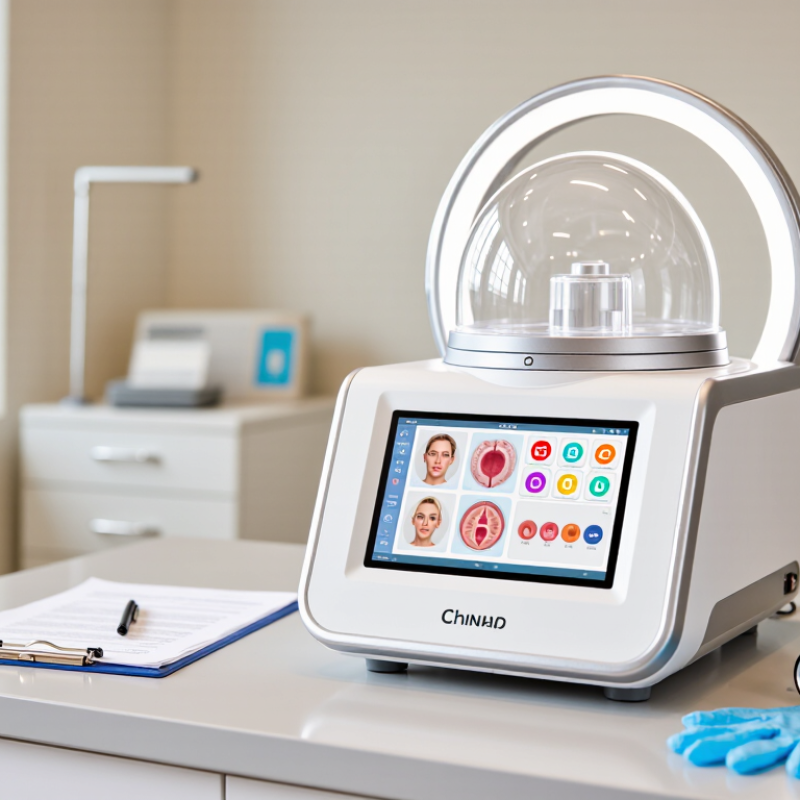
China skin analyzers are professional imaging devices designed to examine visible and underlying skin conditions. Many combine high-resolution cameras, polarized light, UV illumination, and software-based image analysis. These tools can highlight pores, pigmentation, redness, wrinkles, oiliness, and uneven texture.
The process is quick. A practitioner usually cleanses the client’s face and controls the room’s lighting before taking several images. The device then compares captured details across different light modes. Its software identifies patterns and produces a visual report with scores, color maps, and treatment references. In a busy aesthetic clinic, this creates a clearer starting point than casual visual inspection alone.
From practical use, standardized images are valuable for tracking progress over several visits. A practitioner can compare cheek redness or forehead oil levels under similar conditions. However, the software is not a medical diagnosis. Results may change with makeup residue, recent sun exposure, dehydration, or inconsistent camera positioning. Not always precise.
Reliable clinics should calibrate equipment, explain the report clearly, and record consent before imaging. Staff also need training to interpret results instead of repeating automated recommendations. A suspicious lesion, sudden pigmentation change, or persistent irritation requires qualified medical assessment. The device supports professional judgment; it does not replace it.
Cost, image quality, data protection, and after-sales training also deserve careful review. Some systems offer impressive visuals but limited clinical usefulness. A test session may reveal that difference.
Aesthetic clinics need reliable evidence before recommending expensive skin treatments. China skin analyzers can support that process with standardized imaging, polarized light, and UV-assisted assessment. These tools may reveal pigmentation patterns, surface redness, enlarged pores, oil distribution, and fine lines that ordinary lighting can hide. McKinsey’s 2023 beauty market report identifies skincare as roughly 40% of global beauty sales, reflecting strong demand for personalized advice. Yet personalization without measurable data can become guesswork.
Professional assessment depends on repeatable measurements. A useful analyzer should compare images under consistent lighting, record hydration and sebum levels, and track changes across treatment visits. Clear image storage also improves communication between clinicians and clients. The American Academy of Dermatology states that one in five Americans may develop skin cancer during their lifetime. An analyzer cannot diagnose cancer, and clinics must refer suspicious lesions to qualified medical professionals. That limitation matters. Some devices may also overstate accuracy when calibration, skin tone, or operator technique is ignored.
Tips: Use the same camera distance and room lighting each time. Clean the client’s skin first. Record recent sun exposure and active products. Treat the report as supportive evidence, not a final diagnosis. Clinics should validate results against clinical observation, client history, and appropriate professional guidelines. A small error can change a treatment plan. That deserves careful review.
For aesthetic clinics, China-made skin analyzers can make personalized treatment planning more structured. They capture visible details under standardized lighting and magnification. Clinicians may review hydration, pigmentation, redness, pores, texture, and fine lines together. This creates a clearer baseline than a quick visual check.
A trained practitioner can use the report to discuss realistic options with each patient. Dryness may support a barrier-focused routine before stronger procedures. Uneven pigmentation may require sun protection and carefully selected treatments. Redness can encourage a gentler plan and closer monitoring. The analyzer does not replace consultation, medical history, or professional judgment. It supports better questions.
Follow-up scans can show whether the skin is changing after several weeks. Consistent lighting and positioning are essential. Otherwise, the comparison may mislead. No scan is perfect. Skin tone, recent skincare, room temperature, and operator technique can affect results. That limitation matters. Clinics should verify device calibration, protect patient data, and explain findings in plain language. A thoughtful clinician should also question results that conflict with the patient’s symptoms. The screen is not the patient. Used responsibly, this technology can improve documentation, communication, and treatment adjustments without promising instant transformation.
How Skin Analyzers Improve Personalized Treatment Planning
Objective skin analysis adds repeatable measurements for pigmentation, redness, pores, wrinkles, hydration, and texture. These data can be reviewed alongside established clinical grading systems, helping practitioners build more individualized treatment plans and monitor changes consistently over time.
The chart compares the number of ordered grades in commonly used clinical assessment systems: Fitzpatrick Skin Phototype I–VI, Glogau Photoaging I–IV, Investigator’s Global Assessment for Acne 0–4, and Wrinkle Severity Rating Scale 1–5. Skin analyzers complement, but do not replace, professional clinical assessment.
A China-made skin analyzer can improve consultations by turning vague concerns into visible patterns. It may show moisture, oil balance, pigmentation, texture, pores, and redness. Clear images help practitioners explain treatment options with greater consistency. This supports informed conversations, not pressure-based selling. The 2023 ISAPS Global Survey recorded more than 19 million nonsurgical aesthetic procedures worldwide. Clinics need efficient consultation tools as demand grows. However, image results should support professional assessment, not replace it. Lighting, camera settings, and skin preparation can affect readings.
Tips: Standardize room lighting, clean the device before use, and repeat scans under similar conditions. Train staff to explain uncertainty. A confident answer is not always an accurate answer.
The business value extends beyond the first appointment. A clinic can store baseline images, compare later results, and discuss realistic progress during follow-ups. This may improve patient engagement and encourage appropriate repeat visits. According to Grand View Research, the global aesthetic medicine market is projected to expand strongly through 2030, increasing competition among providers. A structured skin analysis process can help a clinic appear more professional and organized. It can also reduce inconsistent recommendations between practitioners. Still, clinics should measure conversion rates, consultation time, retention, and patient satisfaction before claiming return on investment. Some devices produce impressive visuals but limited clinical value. That gap deserves honest review.
Aesthetic clinics should evaluate China skin analyzers as clinical workflow tools, not attractive screens. McKinsey’s 2023 beauty report projects the global beauty market may reach about $580 billion by 2027. This growth increases demand for measurable consultations. However, market growth does not prove diagnostic accuracy.
Ask for repeatability data, image-resolution specifications, calibration procedures, and validation across different skin tones. Request independent testing, not only supplier demonstrations. Verify NMPA registration status, intended use, electrical safety, and quality documentation. ISO 13485 certification can support quality control, but it does not replace clinical validation. Check whether the software separates observation from medical diagnosis. That distinction matters.
Test the analyzer in a real consultation room. Use the same lighting, camera distance, and cleansing routine. Compare three scans taken five minutes apart. Record whether the results remain stable. A polished score can still mislead. I would also test dry, oily, sensitive, and darker skin types. The sample may be too small. That is a weakness worth admitting. A 2023 ISAPS report recorded more than 34 million surgical and nonsurgical aesthetic procedures worldwide, showing how important consistent patient communication has become. Yet patient images require informed consent, controlled access, and clear retention rules. Train staff to explain trends rather than promise outcomes. Review performance monthly, including false alarms, retakes, and patient complaints. The best implementation is measurable, cautious, and sometimes slower than expected.
| Evaluation Dimension | Practical Benchmark or Data Point | Why It Matters to an Aesthetic Clinic | Implementation and Verification Action |
|---|---|---|---|
| Image Resolution | Target: 8–24 megapixels | Higher-resolution images make small areas of pigmentation, redness, pore visibility, and texture easier to document and compare over time. | Request original sample images rather than compressed screenshots. Test whether the same facial area remains clearly visible under identical lighting and positioning. |
| Lighting and Imaging Modes | Recommended: 4–8 standardized modes | Visible light, polarized light, and ultraviolet-related imaging can reveal different surface and subsurface appearance patterns. Standardized lighting improves before-and-after consistency. | Confirm that lighting intensity and camera distance are fixed. Create a clinic protocol requiring the same imaging modes before every treatment review. |
| Capture Time | Target: 30–90 seconds per assessment | Short capture time reduces workflow disruption and makes routine analysis practical during consultations and follow-up visits. | Measure the complete process, including patient positioning, image capture, analysis, and report generation, with a staff member who has received basic training. |
| Measurement Repeatability | Target: coefficient of variation ≤5% for repeat tests | Repeatability helps distinguish actual skin changes from differences caused by camera position, room lighting, or operator technique. | Capture the same volunteer three times without changing the environment. Compare reported values for spots, pores, wrinkles, or redness and document the variation. |
| Analyzed Skin Indicators | Core set: spots, pores, wrinkles, texture, redness, oil, and moisture | A broad indicator set supports more structured consultations and allows practitioners to connect treatment recommendations with observable skin conditions. | Select only indicators that are clinically relevant to the clinic’s services. Avoid presenting algorithmic scores as medical diagnoses or standalone treatment decisions. |
| Moisture and Oil Sensors | Required: documented calibration procedure | Contact-based moisture and sebum measurements can be affected by recent cleansing, skincare products, temperature, and humidity. | Set a standard preparation period, such as removing makeup and avoiding topical products before measurement. Record room temperature and humidity when results are used for comparison. |
| Software Reporting | Recommended: side-by-side images, trend charts, and PDF export | Visual reports help practitioners explain findings clearly and help patients understand progress across multiple visits. | Check whether reports can include patient ID, capture date, treatment notes, and practitioner comments. Use the same report structure for every consultation. |
| Data Security | Required: access control, encryption, and backup | Facial images and skin records are sensitive personal data. Unauthorized access or data loss can create privacy, legal, and reputational risks. | Use individual staff accounts, strong passwords, role-based permissions, encrypted transmission, routine backups, and a documented retention and deletion policy. |
| System Integration | Target: export through PDF, CSV, or secure API | Export capability reduces duplicate data entry and makes it easier to connect analysis results with consultation records and treatment plans. | Test export formats using anonymized records. Confirm that patient identifiers, dates, images, and measurement values remain readable after transfer. |
| Operator Training | Target: initial training plus quarterly quality checks | Consistent positioning, cleansing procedures, lighting, and interpretation are essential for reliable longitudinal comparisons. | Create a one-page operating checklist, assess each operator with the same test subject, and review a sample of reports every quarter. |
| Patient Consultation Value | Recommended: 5–10 minute visual explanation | A structured visual explanation can improve patient understanding, treatment adherence, and follow-up engagement without relying only on subjective observation. | Use neutral language, explain measurement limitations, and present treatment options without promising guaranteed outcomes or implying a medical diagnosis. |
| Total Cost of Ownership | Evaluate over 3–5 years | The purchase price is only one part of the investment. Training, maintenance, software subscriptions, consumables, and replacement costs affect the real financial return. | Build a five-year cost model covering equipment, software, service, calibration, training, downtime, and data migration before approving the purchase. |
| Return on Investment | Track monthly consultation and conversion metrics | The business value should be measured through operational and patient-service outcomes rather than equipment ownership alone. | Track assessment volume, consultation time, treatment-plan acceptance, follow-up rate, repeat visits, and patient satisfaction before and after implementation. |
| Regulatory and Safety Review | Required: verify intended use and local requirements | A device marketed for cosmetic analysis may not be approved for diagnosis or clinical decision-making in every jurisdiction. | Review the product’s intended use, electrical safety documentation, local registration requirements, warranty terms, and user manual before deployment. |
It may display hydration, oil levels, pigmentation, redness, pores, texture, and fine lines. A clearer picture helps.
The report creates a visible baseline for discussion. Dryness may suggest barrier care before stronger procedures. Redness may require gentler choices and closer monitoring. The plan still needs professional judgment.
No. It cannot provide a cancer diagnosis. Suspicious lesions require assessment by a qualified medical professional. Clinics should never treat an analyzer report as a final medical conclusion.
Clean the client’s skin before imaging. Use the same camera distance and room lighting. Record recent sun exposure and active skincare products. Small changes can distort comparisons.
They can show visible changes over several weeks. However, lighting, skin tone, room temperature, and operator technique affect results. A screen may suggest progress, but it does not prove everything. That deserves careful review.
They should question the report. Review the client’s history, symptoms, and clinical appearance. The screen is not the patient. Sometimes the device may simply be wrong.
Images can turn vague concerns into visible patterns. Practitioners can explain options more clearly and consistently. This supports informed conversations, not pressure-based selling. Clear explanations matter.
Stored images can support follow-up discussions and treatment adjustments. They may improve documentation, communication, and patient engagement. Clinics should track consultation time, satisfaction, retention, and suitable repeat visits. Impressive visuals do not automatically prove financial value.
China skin analyzers are professional diagnostic devices that use imaging, lighting, and data analysis to reveal skin conditions that may not be visible to the naked eye. They can assess concerns such as moisture levels, oil balance, pigmentation, pores, texture, redness, and signs of environmental damage. By providing clear visual comparisons and measurable results, these tools help practitioners create more personalized treatment plans, explain recommendations to clients, and monitor progress over time. This answers the question, “why should aesthetic clinics invest in skin analyzers,” especially for clinics seeking accurate, efficient, and client-focused consultations.
For aesthetic clinics, a skin analyzer can improve consultation quality, support treatment consistency, increase client confidence, and encourage long-term skincare engagement. Before implementation, clinics should evaluate image clarity, assessment functions, software usability, staff training requirements, data protection practices, maintenance needs, and compatibility with existing workflows. With proper training and responsible use, a China skin analyzer can become a valuable part of professional skin assessment and clinic management.
OneSe Beauty